
Must Try Tokyo Local Cuisine
Tokyo’s local fare has evolved over a period of around 400 years since the Edo period (1603-1867) when it became Japan’s capital.
Sushi
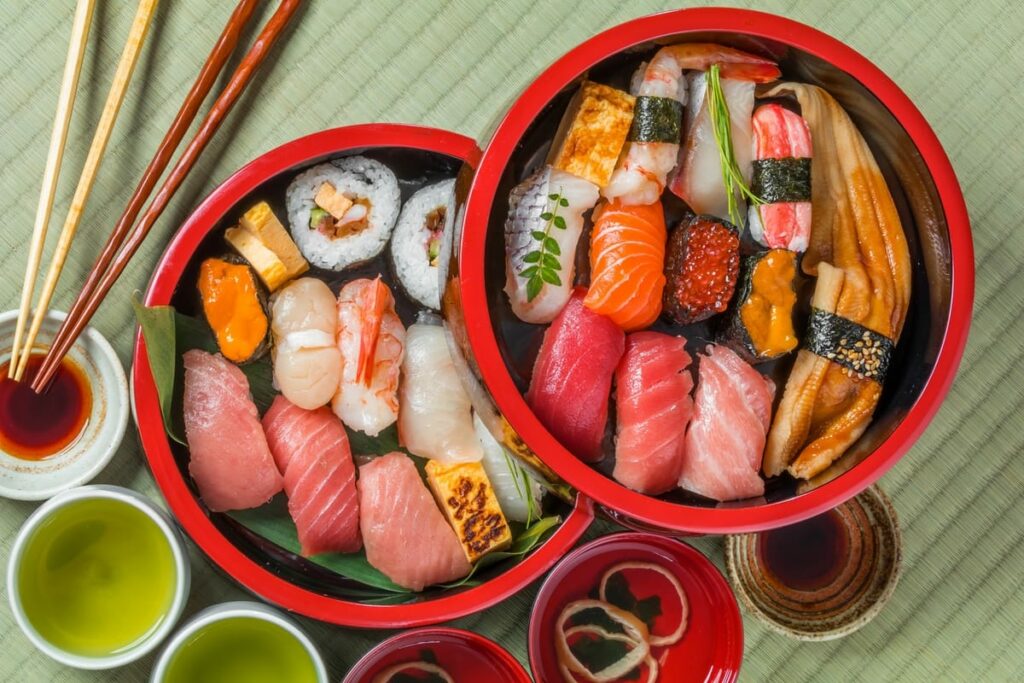
The word Sushi translates directly to mean vinegar and rice (the combination of su, meaning vinegar and meshi meaning rice). And whilst sushi has become internationally synonymous with raw fish there is much more to it and many different types and styles to enjoy. Tokyo is said to be the birthplace of sushi and has its own special style.
Sushi comes in a variety of styles, here are some of the main forms:
Nigirizushi

This iconic style is made by shaping prepared sushi rice into a tight mound (shari) and topping it with raw fish or other ingredients (neta). Also known as edo-mae meaning “in front of Edo” the old name for Tokyo which is where it is believed to have originated as a “fast food” for workers back in the 1800s.
Makizushi

The sushi roll, rice is spread onto a sheet of dry seaweed (nori), neta is placed on the rice and then tightly rolled up in a bamboo mat and finally cut into bite size circles.
Temakizushi

This one is similar to makizushi, however, the nori is rolled by hand into a cone shape making it easy to eat with your hands.
Sushi for every budget

Sushi is a popular style of cuisine in Tokyo and you can find different styles of sushi restaurant to suit your budget ranging from very casual Kaiten zushi (sushi train) budget style sushi (with individual dishes from just 100 JPY) all the way up to Michelin star level fine dining sushi. The middle tier is very popular, costing from around 5,000 JPY for dinner and about half that for lunch. Counter seats are the most sought after as you can see the neta of the day and watch the master sushi chef at work.
Soba
Soba (buckwheat noodles) became a popular “fast food” in Edo by the mid-1700s, now popular all over Japan, it remains a local speciality in Tokyo. In Tokyo’s older neighbourhoods it is common to find Soba restaurants run by families for many generations. The menu in Soba restaurants commonly follows a fixed range of popular noodle dishes with some variations or house/seasonal specialities. The menu covers a series of cold and hot noodle selections with a series of side dishes, such as dashi maki omelette which can be ordered separately to eat in advance of your noodle dish.
When eating soba noodles diners are encouraged to slurp. Slurping helps to get the soup into your mouth along with the noodles, at the same time it is the best way to enjoy the aroma of the buckwheat noodles.
Popular Soba dishes:
Cold style – Mori/Zaru Soba

One of the most basic and popular soba dishes served on a tray with a chilled dipping sauce (tsuyu) to dip your noodles into on the side.
Hot style -Kake Soba

Soba noodles served in a bowl of hot, clear broth.
Did you know?
Since the Edo era, the Japanese have been eating soba noodles around the new year in a tradition called Toshikoshi Soba. It symbolises long life (because of its long shape) and because buckwheat can survive severe weather conditions, it also represents strength and the ability to endure.
Tempura

Tempura is lightly battered and deep-fried fish, seafood, and vegetables. And whilst deep frying sounds heavy, Tempura is delicate, fluffy and has a special crunch, served with a dipping broth it is popular with rice or noodles. This dish goes back to the 16th century when the concept of frying food in oil was brought to Japan by Portuguese merchants and missionaries. It became more popular in the Edo period when oil became more affordable. These days, like sushi, tempura can be enjoyed at every budget from convenience store lunch boxes and high-street noodle restaurants, through to very high-end restaurants specialising in tempura, it even appears in traditional kaiseki cuisine.
Chanko-nabe

This is a hearty hot-pot dish made with meat and various seasonal vegetables. It is commonly known as the food of the sumo wrestlers who eat vast quantities of it to gain or maintain their weight. In Ryogoku and surrounding areas you can see Sumo eating chanko-nabe at one of the Sumo stables or experience it for yourself at one of the popular chanko-nabe restaurants. These establishments are often run by former wrestlers and offer a unique atmosphere.
Monjayaki

A simple dish which you prepare on a hot plate from a bowl of raw ingredients, Monjayaki is probably the least aesthetically pleasing of Tokyo’s fare, but it is a true favourite comfort food of locals. The dish consists simply of flour batter mixed with broth, shredded cabbage, and a variety of additions like pork, baby prawns and various fried vegetables. In Tokyo’s downtown Tsukishima area there is a whole street of around fifty Monja restaurants for those willing to experience Tokyo like a local.
Other Local Cuisine:
Here we introduce two types of cuisine that did not originate in Tokyo but have come part of local culture.
Ramen

Many will be familiar with the tasty noodles served in bowls of soup broth known as ramen. It is a much more recent addition to the list of local favourites having made its way from China in the early 1900s. Since that time it became Japanised and become part of the local culture. And with over 10,000 ramen restaurants in Tokyo there is plenty of variety on offer. The soup broth is all important in ramen and there are 4 main types to choose from: shio (salt broth), tonkotsu (pork bone broth), shoyu (soya sauce broth), and miso (miso broth). These days many more choices are on offer, these are still the most common.
Popular areas with many ramen restaurants include:
- Tokyo Ramen Street, underneath Tokyo station with 8 ramen shops.
- Shimbashi area has many ramen shops, popular with office workers in the area they can get crowded.
- Shinjuku Station has many ramen restaurants scattered in and around the back streets.
Did you know?
-It is not uncommon to queue for ramen and the long queues can be an indication of quality.-There are 21 Tokyo ramen restaurants featured in the 2023 Michelin Guide, 3 with Michelin stars!
Yakitori

Grilled chicken on a stick does not sound that special, but this eating style is a local favourite. The chicken is cooked to perfection on a charcoal grill with either soy-based “tare” sauce or with salt “shio”. Yakitori is available from budget cheap and cheerful all the way up to exquisite fine dining. Most commonly enjoyed in the mid-range in Japanese style pubs called Izakaya. A true yakitori restaurant will have a range of chicken parts on offer that you have never heard of let alone thought to eat and they are a delicious surprise even for the most sceptical! Vegetarians do not fret, you will also find a range of seasonal vegetables on offer too, like shitake mushrooms, corn on the cob, ginkgo nuts and eggplant.
